The Murder of Crows: The Line Between Exhibition
Wexford Arts Centre Wexford Ireland
Monster Truck Gallery Dublin Ireland
Cow House Studios, where I undertook a residency in Ireland, is exactly that: a converted cow house on a working farm in rural County Wexford. From the moment I arrived, one of my strongest impressions of the surrounding landscape was of the vast flocks, or “murders”, of crows that inhabit it.
Wexford Arts Centre Wexford Ireland
Monster Truck Gallery Dublin Ireland
Cow House Studios, where I undertook a residency in Ireland, is exactly that: a converted cow house on a working farm in rural County Wexford. From the moment I arrived, one of my strongest impressions of the surrounding landscape was of the vast flocks, or “murders”, of crows that inhabit it.
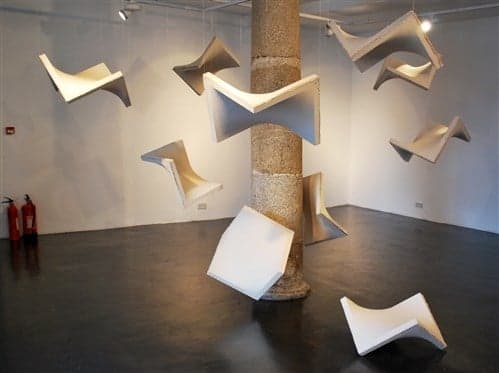
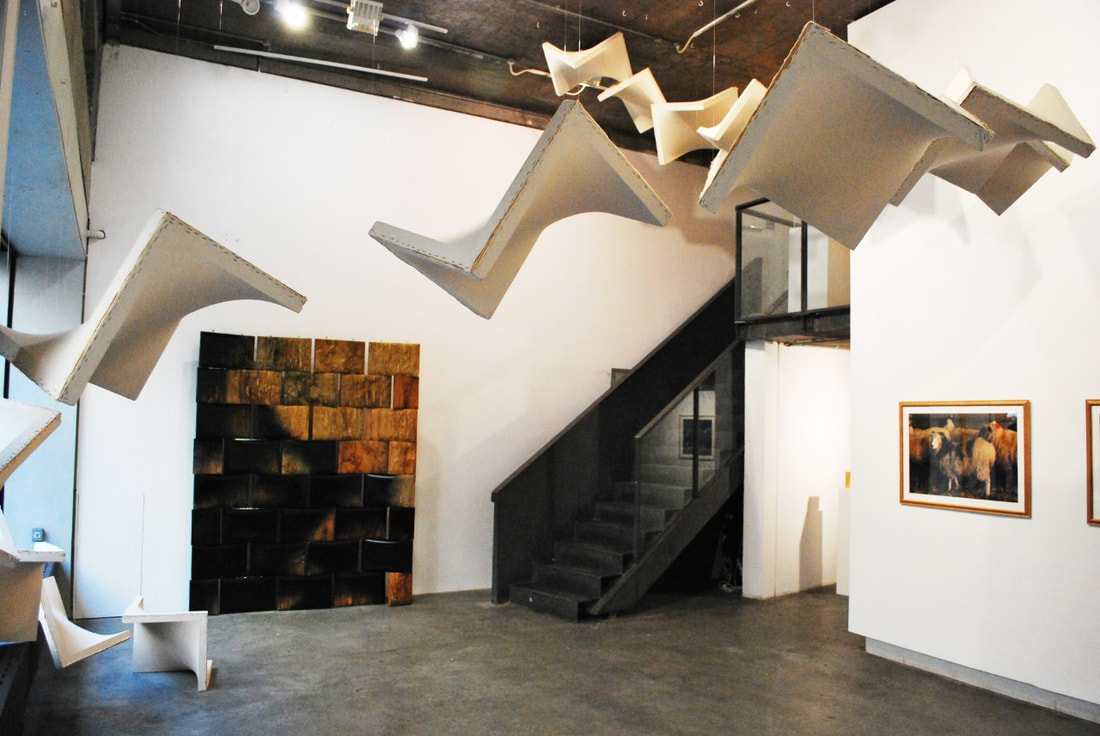
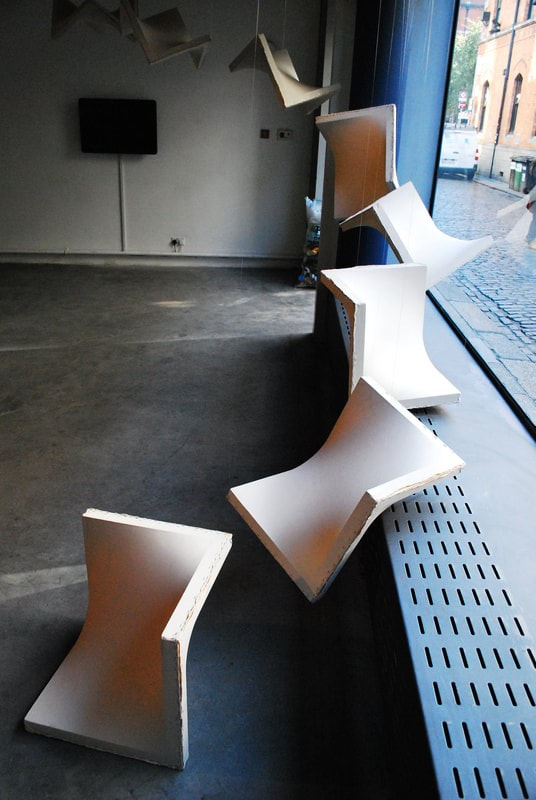
The way these birds occupy space, whether wide open or tightly confined, immediately resonated with my own concerns around volume and spatial relationships. While this aspect of the installation emerged quickly, it took several weeks of experimentation to refine the spatial concepts, developed from my Heaven & Earth diptych, that would form the final work, followed by many months of construction.
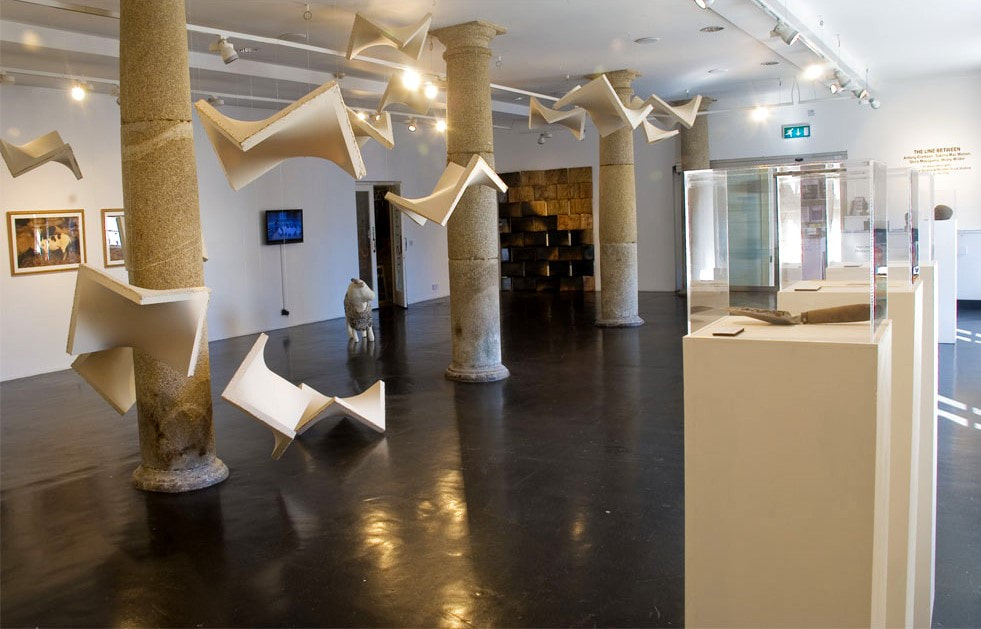
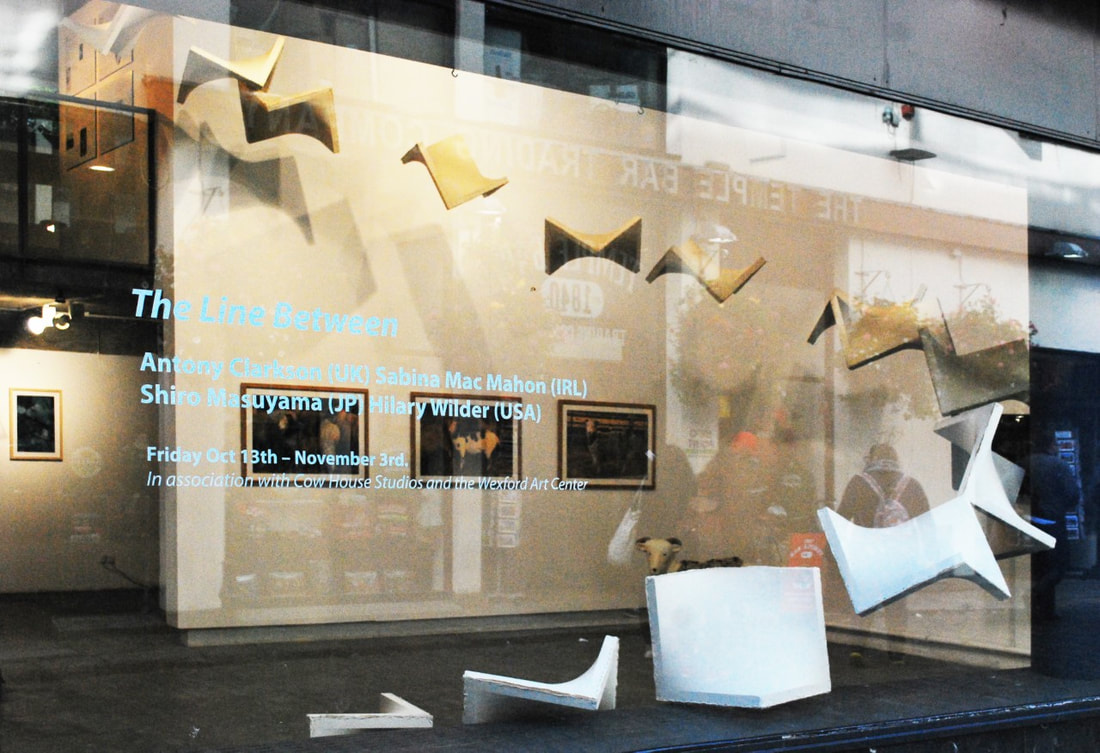
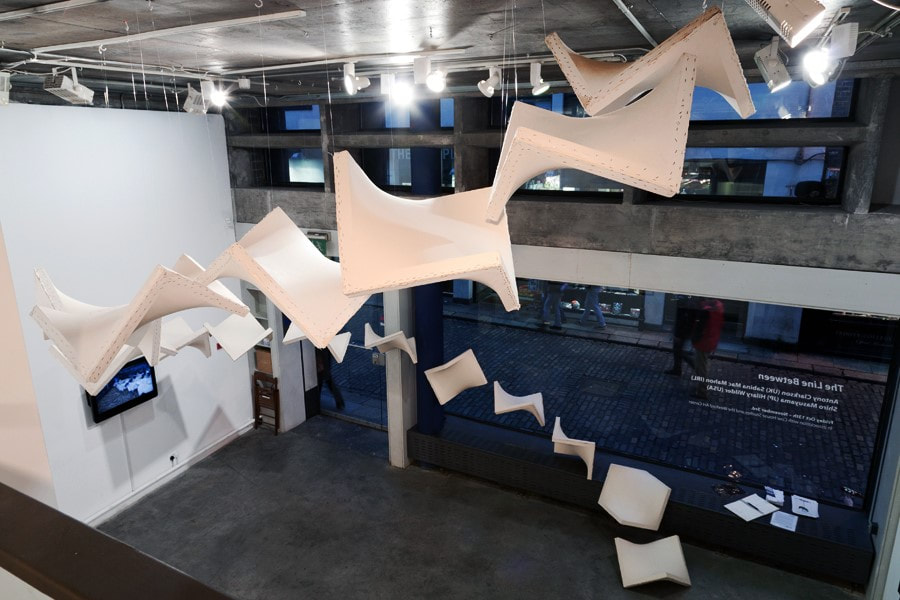
Installed in two markedly different gallery spaces, the work was reconfigured rather than replicated, responding to changes in scale, proportion, and circulation. As the installation moved between two distinct gallery spaces, its form shifted in response to each site’s architecture and constraints. What remained constant was an attention to volume and movement, echoing the way crows navigate both open landscapes and confined spaces, and allowing the work to exist as a continuous yet evolving installation.
The Murder of Crows represents a pivotal moment within my situation-specific practice, foregrounding adaptability as both a conceptual and structural principle. Unlike earlier installations conceived for a singular architectural context, this work was required to inhabit and negotiate two distinct gallery environments, each with its own spatial logic. The installation’s capacity for reconfiguration, rather than duplication, became central to its identity, allowing it to remain materially consistent while spatially responsive. The metaphor of the crow, drawn from the rural landscape of County Wexford, provided a unifying conceptual framework: just as these birds navigate expanses of open sky and compressed enclosures with equal fluency, the installation sustained its internal coherence across divergent architectural conditions.
Through this sustained engagement with volume, movement, and spatial contingency, the work asserted itself as both continuous and mutable, reinforcing the reciprocal relationship between form, site, and perception that underpins my broader installation practice.