Concrete Haiku, Mix Exhibition,
PS Mirabel Gallery,
Manchester, UK, 2013.
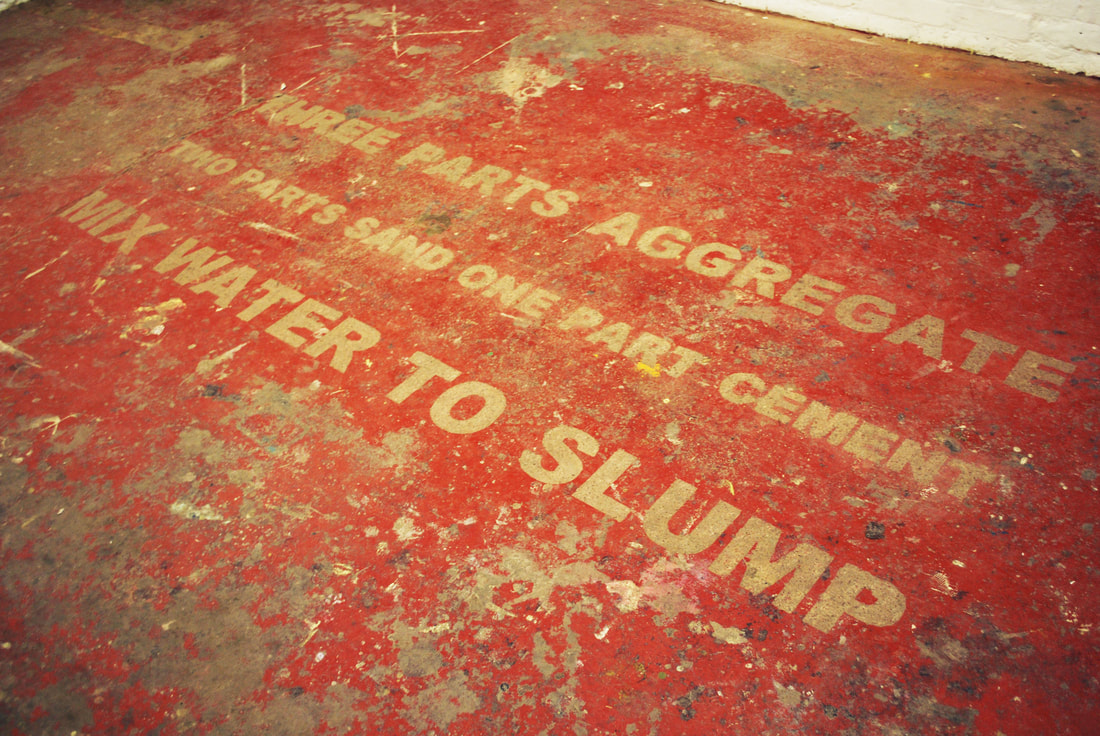
In 2013, I was invited to produce a response to the materiality of concrete for the exhibition Mix. Adopting a deliberately contrarian approach, I elected not to introduce additional materials into the gallery space; instead, I investigated the latent potential of the gallery’s existing concrete floor as both medium and site of intervention.
At that time, PS Mirabel was an emerging gallery, sustained more by collective goodwill than by financial resources. The primary exhibition space bore visible traces of prolonged use, most notably in its painted concrete floor, which was chipped and abraded, exposing fragments of the underlying substrate. These conditions offered not only a material constraint but also a conceptual opportunity.
PS Mirabel Gallery,
Manchester, UK, 2013.
In 2013, I was invited to produce a response to the materiality of concrete for the exhibition Mix. Adopting a deliberately contrarian approach, I elected not to introduce additional materials into the gallery space; instead, I investigated the latent potential of the gallery’s existing concrete floor as both medium and site of intervention.
At that time, PS Mirabel was an emerging gallery, sustained more by collective goodwill than by financial resources. The primary exhibition space bore visible traces of prolonged use, most notably in its painted concrete floor, which was chipped and abraded, exposing fragments of the underlying substrate. These conditions offered not only a material constraint but also a conceptual opportunity.
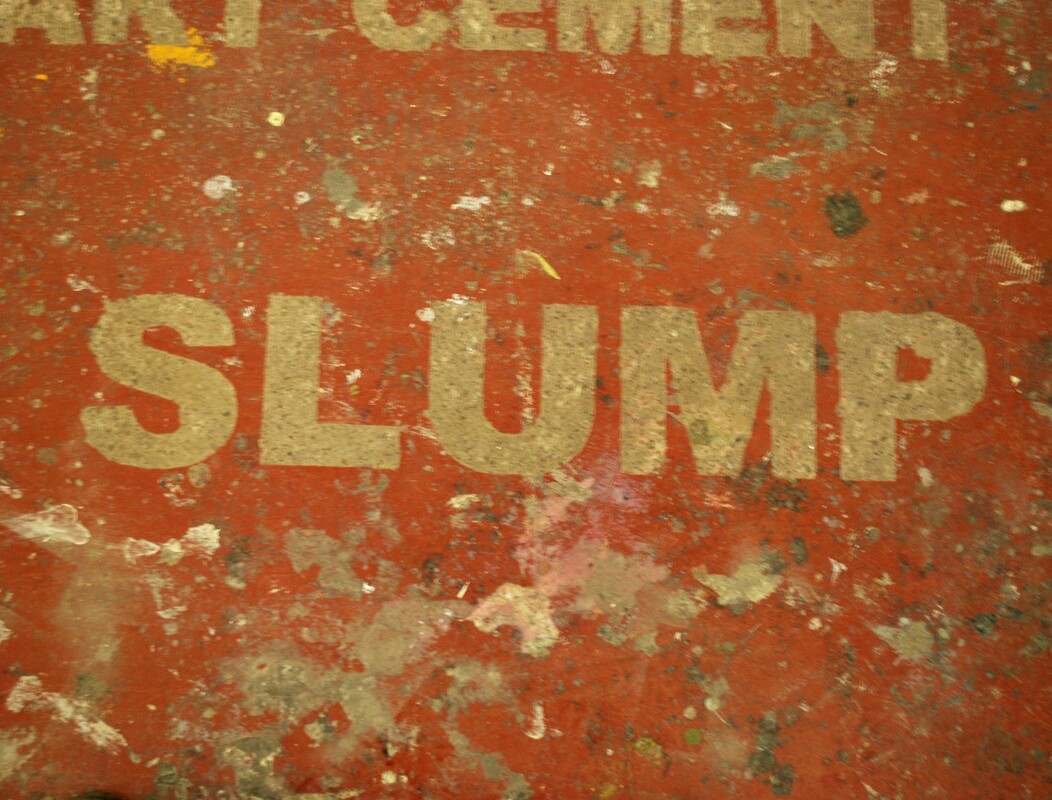
My prior engagement with both haiku and concrete poetry informed the development of the work, enabling a synthesis of these literary traditions within a spatial and material framework. Each letter of the poem was incised through successive layers of paint and into the concrete itself, thereby transforming the floor into both a textual surface and a physical artifact. In this way, language became embedded within the architecture of the site.
The composition of the haiku was resolved through reflection on the exhibition’s title, Mix, a colloquial term used within the construction industry to denote concrete. The notion of a “mix” also suggests a set of instructions or a recipe; accordingly, the haiku was structured as a set of directions for achieving an ideal concrete mixture, referred to technically as “slump.”
Ultimately, the work operates at the intersection of material practice and linguistic form, collapsing distinctions between text, surface, and structure. By inscribing the poem directly into the gallery floor, the project foregrounds processes of erosion, labor, and transformation, while recontextualizing concrete as both a physical substance and a conceptual framework. In doing so, it underscores the capacity of my site-responsive practice to reveal meaning within existing conditions, rather than relying on the introduction of new materials.