
Paper Scissors Rock ,
Rock-Paper-Scissors Exhibition,
The Scholar's Rock Project,
Chinese Arts Centre,
Manchester, UK, 2010.
During his time as artist in residence at the, then, Chinese Arts Centre, Wang Jun was working on what he termed 'The Scholar's Rock Project' which involved the consideration of the children's game Rock-Paper-Scissors and it's international appeal.
‘Rock-paper-scissors’ is a universal folk game that dates back to ancient times. Players substitute the three elements of Rock, Paper and Scissors with representative hand gestures and the winner is determined by following the rules:
Scissors cut paper (scissors wins against paper)
Paper covers rock (Paper wins against Rock)
Rock breaks scissors (Rock wins against Scissors)
If both players show the same gesture, the game is tied.
Rock-Paper-Scissors Exhibition,
The Scholar's Rock Project,
Chinese Arts Centre,
Manchester, UK, 2010.
During his time as artist in residence at the, then, Chinese Arts Centre, Wang Jun was working on what he termed 'The Scholar's Rock Project' which involved the consideration of the children's game Rock-Paper-Scissors and it's international appeal.
‘Rock-paper-scissors’ is a universal folk game that dates back to ancient times. Players substitute the three elements of Rock, Paper and Scissors with representative hand gestures and the winner is determined by following the rules:
Scissors cut paper (scissors wins against paper)
Paper covers rock (Paper wins against Rock)
Rock breaks scissors (Rock wins against Scissors)
If both players show the same gesture, the game is tied.
|
|
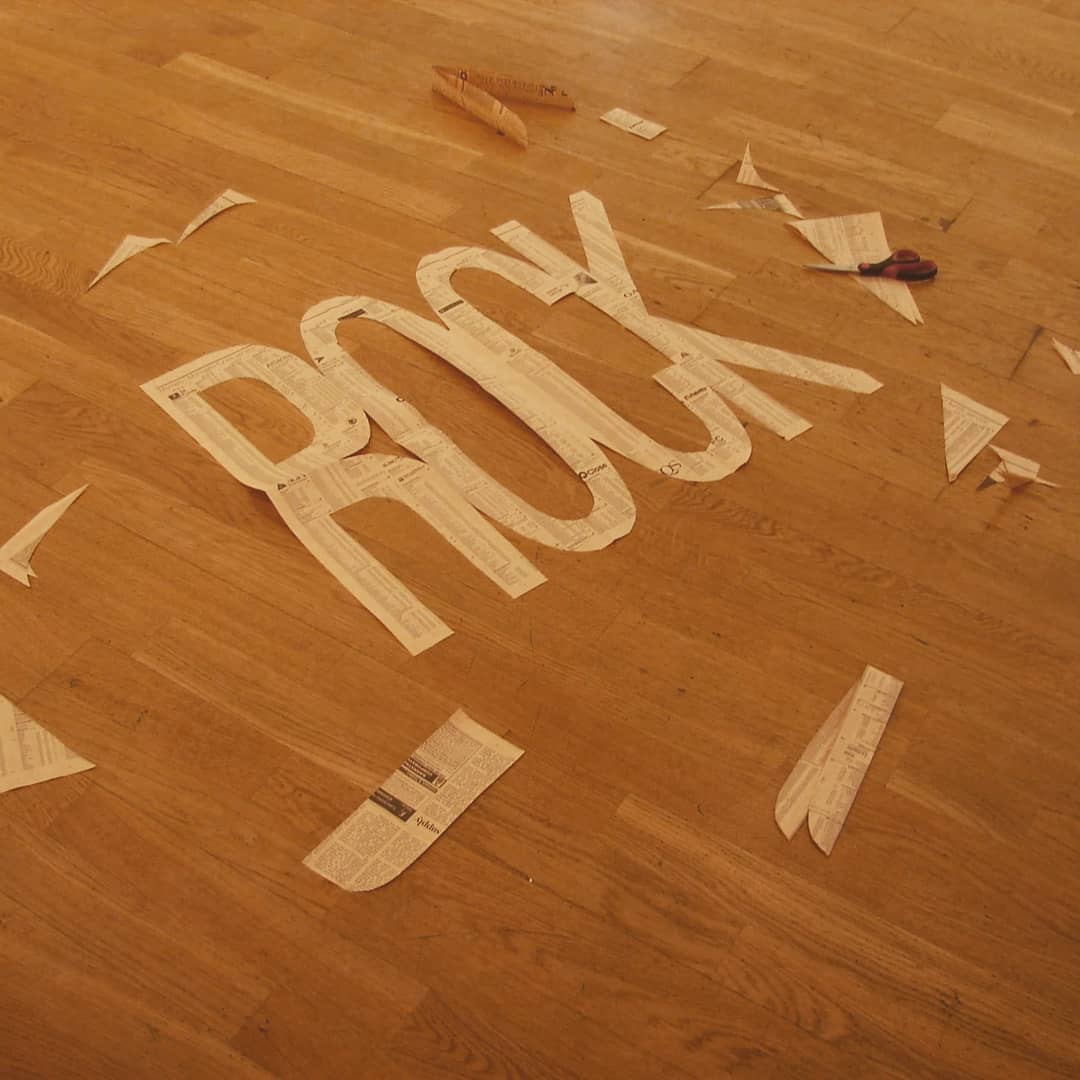
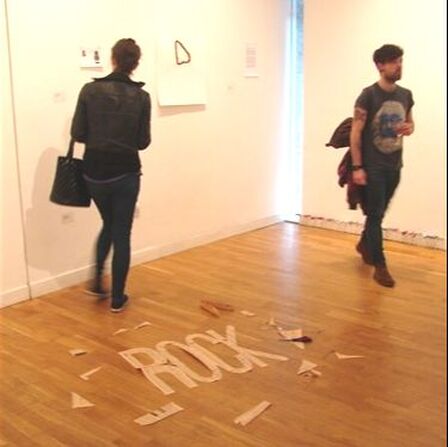
My response to this was to take my starting point from another equally universal children's game which owes its origin to Japanese and Chinese culture, kirigami or in simple terms cut paper doll chains. For me this was the perfect reply to Wang Jun's challenge as it already involved two of the elements of his project; Paper and Scissors. These two, creative components if you like, the material and the tool, which logically meant that those two creative elements could be used to form the third, Rock. With the basic idea in mind all that was left for me to decide upon was exactly what paper to use for the piece? The answer came to me relatively simply in the end, I was already in thinking about using news paper for the piece and at this time those newspapers were full of the credit crisis cause in a large part by the collapse of the Northern ROCK Bank. This was the final piece of the jigsaw, both esthetically and conceptually; the piece is made from the Markets Data pages of the Financial Times.